
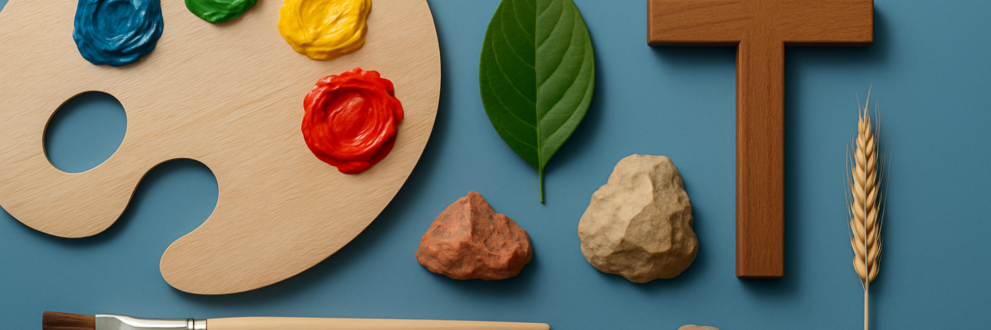
From the hallowed halls of the Sistine Chapel to the serene beauty of a countryside chapel, sacred art has long held a revered place in Christian expression. But what makes this art so deeply resonant? It is the Christian artist’s palette, an amalgamation of earthly elements imbued with spiritual significance, that breathes life into every brushstroke. In this exploration, we delve into the profound spiritual ramifications that these earthly elements portray, offering insights into how art bridges the terrestrial and the divine.
The Earthly Elements of Sacred Art
Christian visual artists have historically drawn from the natural world to convey spiritual truths. Soil, water, and light—a trio of earthly elements—often serve as symbolic motifs, each holding unique connotations in Christian iconography. Soil represents humility and creation, a nod to the biblical account of man formed from dust. Water, a symbol of purification and life, echoes the sacrament of baptism. Meanwhile, light, a sign of divine revelation, emerges in countless depictions of the divine across Christian art.
Consider Michelangelo’s Creation of Adam, where the earthly element of human flesh is portrayed with divine vitality. Here we see not merely a representation of a biblical event, but a profound theological statement on humanity’s divine origin and eternal connection to God. This artistic tradition continues in modern works by artists such as Makoto Fujimura, who incorporates elements like precious metals to signify the divine amidst the mundane.
The Spiritual Significance of Colour in Christian Art
Colours are more than pigment on canvas; they are powerful conveyors of meaning. In sacred art, earthly colours take on theological significance, facilitating a deeper connection between the viewer and the spiritual narrative. Deep blues and reds, for instance, are often used to denote divinity and sacrifice, respectively. These colours are not merely aesthetic choices but are steeped in centuries of Christian tradition.
A quintessential example can be found in Leonardo da Vinci’s The Last Supper. The vibrant hues utilised in the painting draw attention to Jesus, who is central to the composition both visually and spiritually. The juxtaposition of light and dark serves to highlight the duality of human nature and divine grace, themes that resonate deeply within Christian theology.
For artists today, such as Daniel Bonnell and Patricia Brintle, colour remains a vital tool in expressing the ineffable. Their works continue to celebrate Christian identity through palettes that are both peaceful and purposeful, ensuring that the colours they choose reflect the deeper meanings drawn from scripture.
Symbolic Iconography: Earthly Elements as Metaphors
The use of symbolic iconography allows Christian visual artists to transcend literal interpretations, offering metaphors that speak to the soul. The cross, the lamb, and the dove are among the most potent symbols, each representing key tenets of the Christian faith. These symbols are recurrent in artworks from the serene creations of Fra Angelico to the vivid compositions of El Greco.
One striking example is found in stained glass cross depictions, where the interplay of light and shadow through coloured glass creates a living tableau of theological reflection. These symbols encourage spiritual reflection and reinforce faith connections, serving as daily reminders of divine truth.
Modern Christian artists such as He Qi and Scott Erickson continue this tradition, infusing contemporary culture with timeless symbols that speak to new generations. Their works, often featuring customisable prints and high-quality materials, make sacred art accessible while retaining its profound spiritual resonance.
The Role of Sacred Art in Worship and Devotion
Sacred art is not only for contemplation but serves as a vital tool in worship and daily devotion. Whether gracing the walls of a church or the private space of a home, these artworks create a serene atmosphere conducive to prayer and reflection. They provide visual meditation points, offering inspiration and hope in an often-chaotic world.
The role of art in enhancing worship is exemplified in Rembrandt’s biblical narratives, which capture both the majesty and the intimacy of divine encounters. In a modern context, artists like Akiane Kramarik invoke similar inspiration through their digital and traditional mediums, engaging the viewer in a dynamic dialogue with their faith.
Moreover, sacred art supports worship environments by reinforcing biblical teachings. Art collectors and interior designers often seek these works for their church and home décors, knowing that they add meaning and elevate the aesthetic experience.
The Continuing Legacy of Christian Visual Artists
Throughout history, Christian visual artists have been instrumental in shaping the understanding and appreciation of sacred themes. From Albrecht Dürer’s meticulously detailed engravings to Salvador Dalí’s surreal interpretations of biblical stories, each artist has left an indelible mark on the spiritual landscape.
In today’s world, the legacy continues with artists like Ron DiCianni and Morgan Weistling, whose works celebrate the enduring power of Christian themes. Their devotion to capturing the truths of faith ensures that the legacy of sacred art remains robust and relevant.
The significance of this artistic tradition cannot be overstated. It not only enriches personal faith but also strengthens community identity, encouraging collective reflection and conversation. In this way, sacred art serves as a bridge between the past and the present, offering a visual testament to the unchanging truths of the Christian faith.
Whether you are a pastor seeking to enhance your worship space, a family looking to inspire daily devotion at home, or an art collector pursuing meaningful additions to your gallery, sacred art provides a unique avenue to deepen your spiritual journey. And as the tradition of Christian visual artists continues to evolve, it promises to inspire generations to come, ensuring that the message of the gospel remains vibrant and compelling.
In exploring the spiritual significance of earthly elements in sacred art, we discover not only the beauty of creation but the ultimate Creator who inspires it. Through these artworks, the Christian artist’s palette unveils the divine in the midst of the ordinary, inviting us all to witness the sacred in every brushstroke.
Get in Touch
Explore Faith-Inspired Art, Shop Christian Artwork Today, Bring Scripture to Life in Your Space, Discover Art That Reflects Your Faith, Transform Your Home with Biblical Art, Own a Piece of Spiritual Beauty, View the Collection Now, Shop Sacred Art Prints, Inspire Your Faith Daily, Find Your Favorite Bible-Inspired Piece
Visit: Buy our Christian Art Work