Choosing and Displaying Scripture Art in Church Halls and Prayer Rooms

A well-chosen piece of art can change the feel of a church hall, a prayer room or a Sunday school classroom. It can welcome visitors, give children something to talk about, mark the turning of the church year and offer a quiet focus for prayer. Chosen in a hurry, it can also end up curling behind a radiator for years. This guide offers practical advice on choosing scripture art for shared church spaces, where to put it, how to change it through the seasons and how to look after it.
Start with the purpose of the room
Before choosing anything, ask what each space is for and who uses it. The answer will shape the size, style and tone of the artwork.
Church halls and foyers
Halls are busy, multi-purpose spaces used by toddler groups, lunch clubs, community meetings and outside hirers. Art here works best when it is welcoming and easily understood by people who may never attend a Sunday service. Warm, hopeful verses and recognisable images, such as a shepherd, a dove or an open Bible, tend to work well. On a large wall, a row of A4 prints in matching frames holds its own far better than a single small piece.
Prayer rooms and quiet spaces
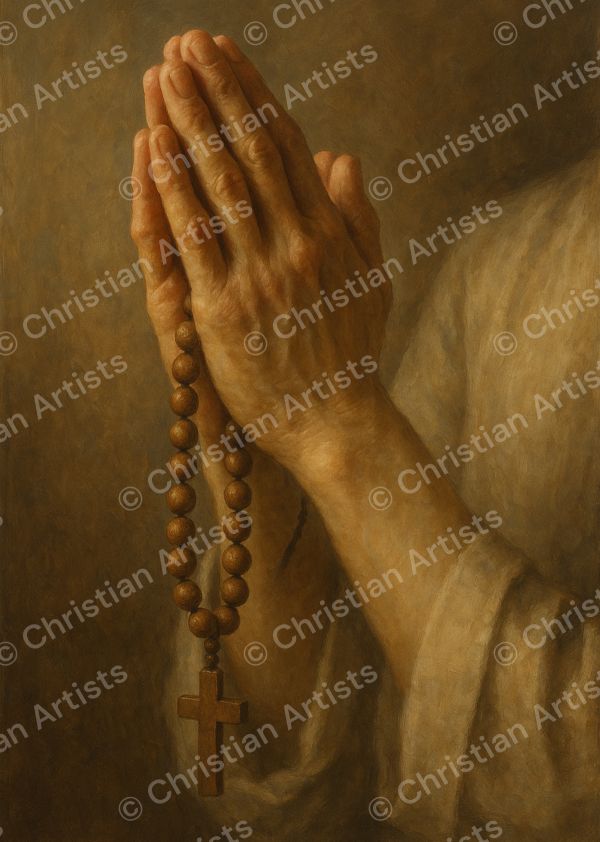
A prayer room needs less, not more. One or two carefully chosen images give a visual focus without distraction. Calmer styles, such as sacred iconography or gentle abstract work, suit these spaces, and a single short verse can serve as a prompt for anyone who comes in to pray. Consider placing a print at seated eye level, on a small easel or picture ledge near a chair or prayer stool.
Sunday school and children's rooms
Children respond to clear stories, bold colour and images they can point at. Illustration and folk-art styles often work well. Choose verses short enough to learn, such as "Suffer little children, and forbid them not, to come unto me" (Matthew 19:14) or "The LORD is my shepherd; I shall not want" (Psalm 23:1). Hang pictures at a child's eye level and talk about them: a picture that is discussed becomes part of the lesson rather than wallpaper.
Placement: practical points
- Height. For adults, a common gallery rule of thumb is to hang art so that its centre sits roughly 145–150 cm from the floor. In children's rooms, lower this to suit the age group, and in prayer rooms consider seated eye level.
- Light. Avoid walls in direct sunlight, which fades prints over time. Glare from windows can also make glazed frames hard to see, so check the view from where people will actually sit or stand.
- Heat and damp. Keep prints away from radiators, heaters, kitchen hatches and outside walls prone to condensation.
- Safety. In rooms used by children or busy groups, choose acrylic glazing rather than glass, and secure frames with proper fixings, such as mirror plates or security hangers, so they cannot be lifted or knocked off.
- Sightlines. In a hall, think about where people face during an event, such as the serving hatch, the stage or the entrance, and place the key piece where it will be seen.
If you intend to fix anything permanently to the fabric of a church building, particularly a listed one, speak to your churchwardens or whoever is responsible for the building first, as permission may be required.
Following the church year
Changing artwork with the seasons is one of the simplest ways to keep a space fresh and to teach the rhythm of the Christian year. Many churches follow a pattern of seasons and colours along these lines:
- Advent (purple, or blue in some churches): waiting, hope and prophecy. Isaiah's promise of light, the Annunciation, candles.
- Christmas and Epiphany (white and gold): the nativity, the shepherds, the star and the wise men.
- Lent (purple): wilderness, repentance and prayer. Simpler, quieter images suit the season.
- Holy Week and Easter (red in Holy Week in some traditions; white and gold at Easter): the cross, the empty tomb, the risen Christ.
- Pentecost (red): the dove, the rushing wind and tongues of flame.
- Ordinary Time (green): growth and discipleship. Parables, the vine, and harvest imagery in the autumn.
The Church of England publishes material on the seasons and the lectionary, and many other denominations follow a similar pattern. Our seasonal Christian artwork is released in step with the church year, so new pieces for Advent, Lent or Pentecost appear as each season approaches.
Making rotation easy
Choose one standard frame size for each wall and keep a labelled folder or archive box for prints that are out of season. Swapping a print then takes a couple of minutes, and the same frames last for years. A simple list of what is displayed where, and when it was last changed, saves a lot of guesswork when volunteers change roles.
Caring for artwork in shared spaces
- Use acid-free mounts and backing board so prints do not discolour.
- Dust frames with a dry, soft cloth. If the glazing needs cleaning, spray a suitable cleaner onto the cloth, never directly onto the frame.
- Check fixings at least once a year, especially in halls where furniture is moved around.
- Replace a print if it fades, gets damp or is damaged, rather than leaving a tired picture on display.
Licence-friendly practice
Churches rightly care about doing things properly, and that includes respecting the work of others. A few habits keep everything above board.
- Use images you have the right to use. A picture found through a web search is not automatically free to print. Buy from a source that sells prints for display, or use images clearly licensed for your purpose.
- Read the terms. Our terms and conditions explain how purchased downloads may be used. If you have something else in mind, such as reproducing artwork on service sheets, event posters or anything to be sold, please get in touch with us before you go ahead.
- Do not assume an existing licence covers images. A licence your church holds for worship songs or music may not extend to artwork, so check what it actually includes.
- Keep a simple record. Note where each print came from and when it was bought. It helps with replacements and answers questions if they arise.
Getting started
You do not need a large budget to make a real difference. Start with one wall: a welcome verse by the entrance, a single image in the prayer room or a seasonal print in the children's corner. See how people respond, then build from there. If you are planning artwork for a whole building or a particular project, our page on artwork for churches and church halls explains how we can help.