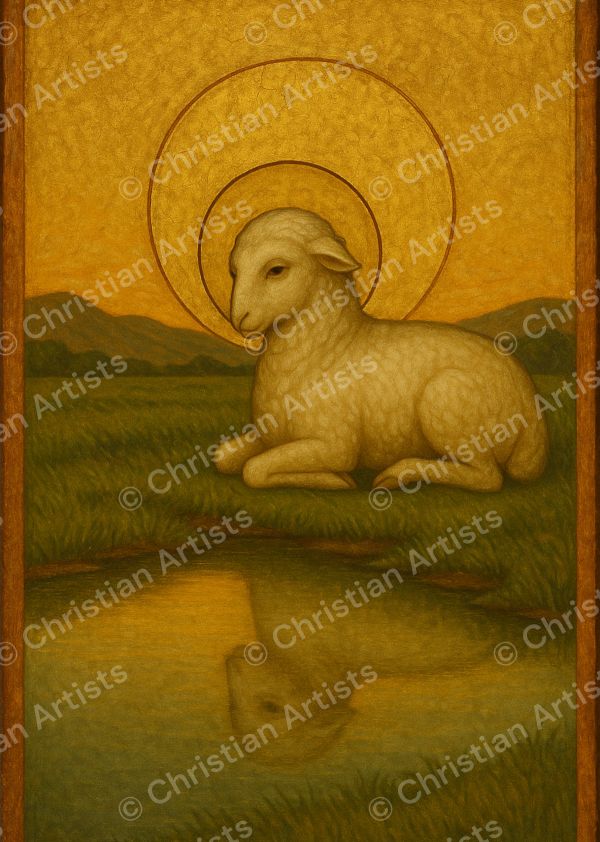
Sacred Iconography Art Prints
Iconography is one of the oldest continuous traditions of Christian art. It grew in the Byzantine world and remains central to Eastern Orthodox worship today. Icons were traditionally painted in egg tempera on wooden panels, often against backgrounds of gold leaf that suggest the light of heaven. After a long controversy over religious images, the Second Council of Nicaea in 787 affirmed their place in Christian devotion.
The look is instantly recognisable. Figures face the viewer calmly and directly, faces are elongated and still, and space is flattened, sometimes using “reverse perspective”, in which lines open outwards into the scene instead of meeting at a distant vanishing point. Colours and gestures carry meaning. Andrei Rublev's early fifteenth-century Trinity, showing three angels at Abraham's table, is perhaps the best-known Russian icon of all.
Icons are made not to display the painter's skill but to draw the viewer into prayer, which is why the style suits devotion so well. Our prints borrow this visual language of gold, stillness and symbol. They are digital artworks inspired by the tradition rather than blessed liturgical icons, but they can bring the same sense of quiet reverence to a prayer corner or church wall.
2 artworks